Everyone in marketing is asking: Which AI tool? Which platform? Which automation stack?
But the companies actually winning — especially in B2B — are asking a different question:
“Who is really buying this… and how do they actually decide?”
The uncomfortable truth:
Most marketing doesn’t fail because of bad tools. It fails because of a shallow understanding of the buyer.
Here’s what usually happens:
- You pick a tool
- Launch campaigns
- Write feature-heavy messaging
- Push content everywhere
And then…
❌ Low conversions ❌ Poor lead quality ❌ Long sales cycles
Because you’re talking about your product — not their reality.
The shift that changes everything:
- Stop asking: “Which tool should I use?”
- Start asking: “What is my buyer worried about right now?”
The Missing Piece: Your Audience Map
Before tools. Before campaigns. Before messaging.
You need this
1. Who are they (really)?
Not job titles.
- What does their day look like?
- What pressure are they under?
- Are they already looking for a solution — or unaware?
2. Where do they actually spend time?
Not where you like to market.
- Communities
- Reviews
- Conversations
- Content they already trust
Most real insights don’t come from dashboards They come from where people talk freely
3. What are they searching for?
Not your product.
Their problem.
- “how to reduce manual work”
- “how to fix delays in process”
Your best copy already exists — in their words
B2C buyers:
- Fast
- Emotional
- Convenience-driven
B2B buyers:
- Slow
- Risk-averse
- Need internal justification
B2B buyers are not trying to win. They are trying not to make a bad decision.
What most teams get wrong in B2B
You think you’re selling to “a company.” No you’re not.
You’re selling to:
- A user who wants less work
- A manager who wants efficiency
- An executive who wants ROI
- A procurement team that wants zero risk
And each of them is asking a different question.
If your messaging is the same for all → it works for none.
What actually drives decisions (in real life)
Not buzzwords. Not features.
This is what works:
✔ “Has someone like me done this successfully?”
✔ “Can I justify this internally?”
✔ “What happens if this fails?”
That’s why:
- Case studies beat claims
- Proof beats persuasion
- Specifics beat buzzwords
A simple example
Let’s say you’re selling an enterprise workflow tool.
Most companies say:
“AI-powered automation platform”
But buyers care about:
✔ “Can this reduce my team’s delays?” ✔ “Will this integrate with what I already use?” ✔ “Is this risky to implement?”
Now compare:
“Next-gen AI platform”
“Reduce approval delays by 60% without changing your existing systems”
One is marketing. The other is decision-making clarity.
Where real insights come from (not dashboards)
If you want better marketing, stop guessing.
Go here:
- Product reviews → “It’s good but…”
- Community discussions → raw frustration
- YouTube comments → confusion
- LinkedIn threads → priorities
The language your buyers use there = your best copy
The biggest mistake I see
Using B2C-style marketing in B2B
- Too many buzzwords
- Too little proof
- Too much “vision”
- Too little reality
B2B buyers don’t trust easily.
They trust:
- Evidence
- Specific outcomes
- People like them
The real process (that actually works)
- Understand the buyer deeply
- Map decision roles
- Observe real conversations
- Capture exact language
- Validate patterns
- Build messaging
- THEN use tools
Most people start at step 7.
That’s the problem.
One thing you can do today
Spend 45 minutes doing this:
- Read reviews of a competitor
- Go through a community discussion
- Check comments on a relevant video
Don’t sell. Don’t post.
Just observe:
- What frustrates people?
- What words do they use?
- What keeps repeating?
That’s your real marketing strategy.
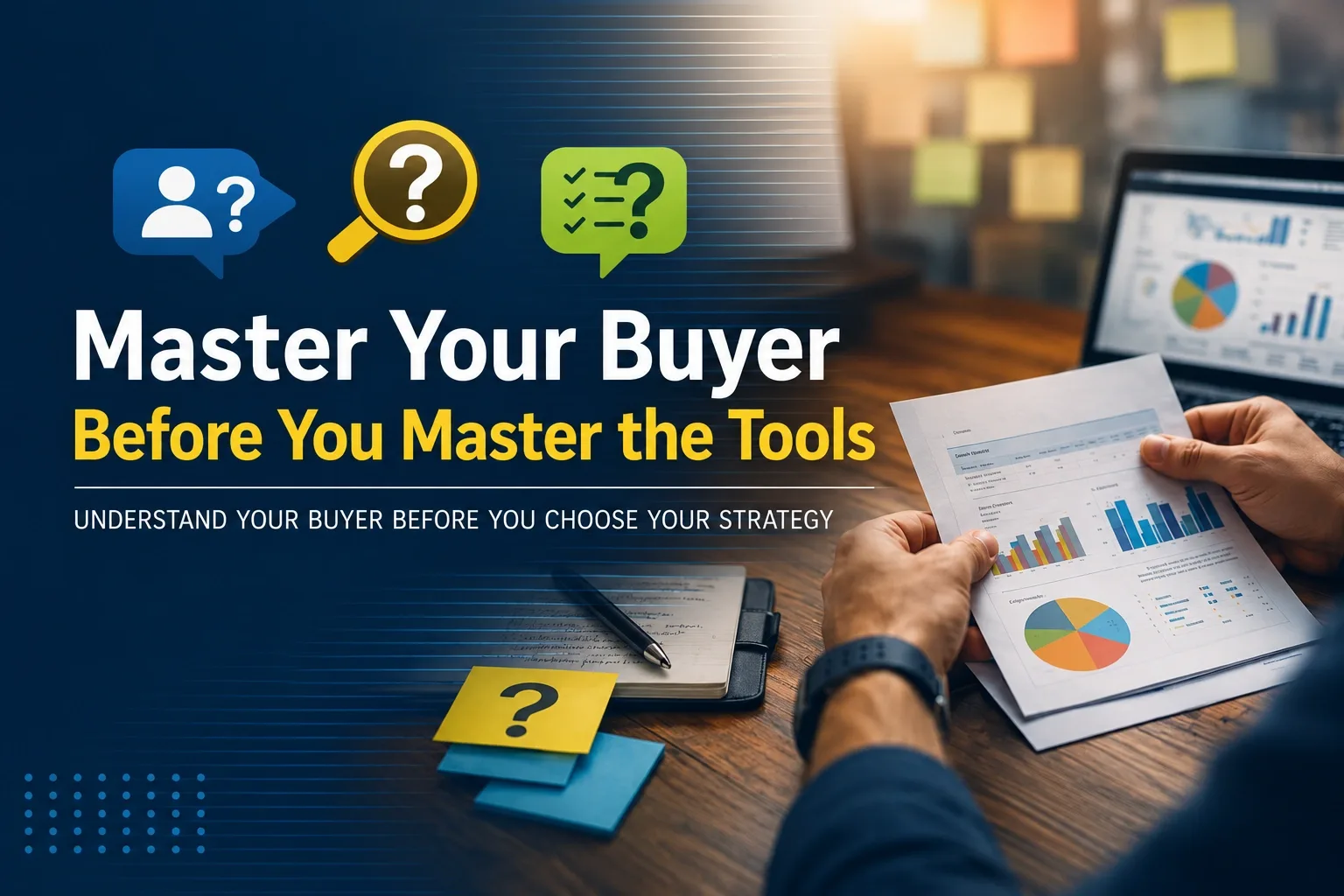
Before you master tools… master your buyer.
Everything else becomes easier after that.
Thanks and Regards
Chandra S Joshi
Need a Marketing Strategy?
A short conversation is usually enough to know whether a Strategy Sprint, a Go-to-Market plan, or ongoing Fractional CMO Advisory is the right starting point.
Book a Conversation →