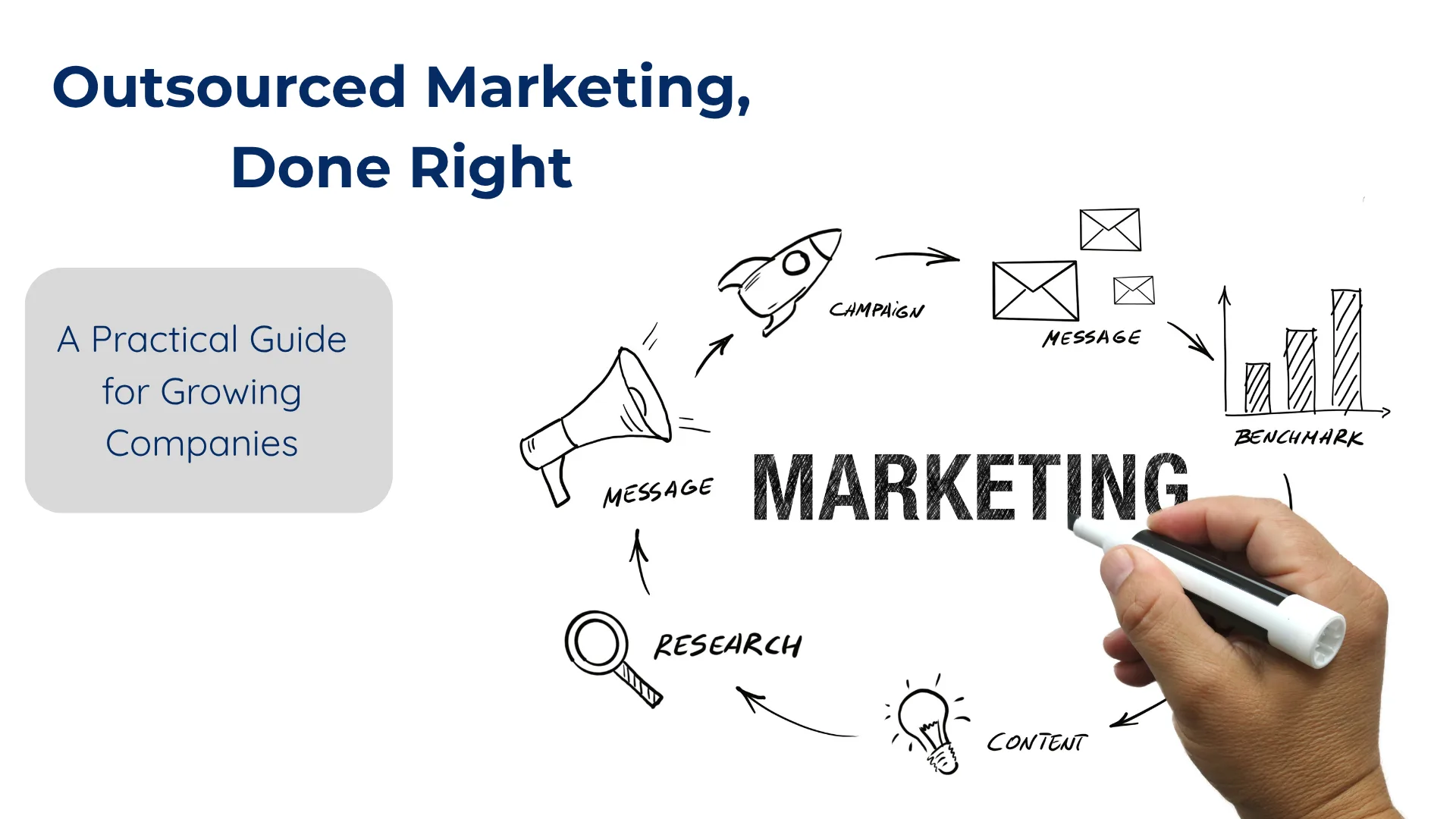
Most companies outsource marketing for the same reason they outsource payroll or legal: the work needs to happen at a professional standard, but doesn't yet justify a full internal department. The trouble is that "outsourced marketing" gets used to describe wildly different arrangements — a freelancer on retainer, a agency running one channel, a full team covering content, campaigns and operations — and the wrong fit for a given stage is usually why the results feel underwhelming.
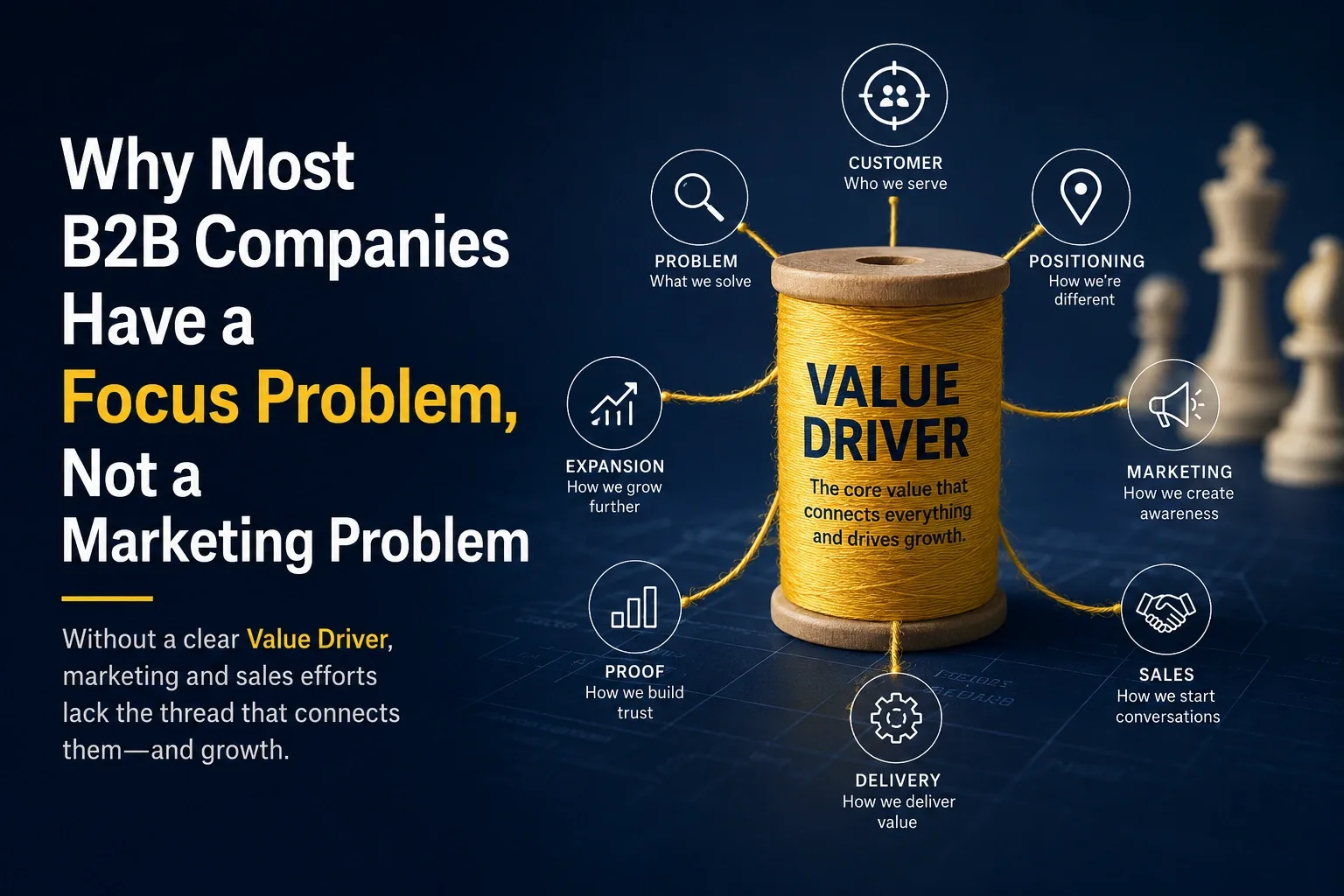
What actually makes outsourced marketing work isn't the vendor's size or their client list. It's whether the team executing the work is operating against a real strategy, has enough range to cover more than one channel, and reports to someone who can be held accountable for outcomes rather than just deliverables.
What "done well" looks like
Outsourcing marketing works best when it isn't just execution-for-hire bolted onto whatever plan already exists. The structure Emanace uses ties outsourced execution directly to strategy through the Emanate → Expand → Shine framework — direction gets set first, a dedicated team runs the work, and senior oversight keeps it honest as it scales:
01
Set the direction before assigning the work
Market diagnosis, ideal customer profile, positioning, and a 90-day roadmap — so the outsourced team is executing against a plan, not guessing at one.
02
Hand execution to a dedicated team
Content, campaigns, and marketing operations run by people who specialize in exactly that — instead of a generalist internal hire stretched across everything at once.
03
Keep senior oversight in the loop
Ongoing leadership checks that performance against the plan, adjusts priorities, and prevents outsourced execution from drifting away from what the business actually needs.
An outsourced team without a strategy behind it produces a lot of activity. A strategy with no team to run it produces a slide deck. The two only work together when someone senior is accountable for both.
What's actually on the table
Emanace's Marketing & GTM Outsourcing track covers the day-to-day execution layer — content, campaigns, and the operational work of running marketing — and can run standalone for companies that already have a strategy and just need capacity, or paired with the Strategy & Advisory track when direction needs setting first. Either way, the point of outsourcing this way is capacity at a senior standard, not a lower-cost stand-in for a real function.
Who this actually fits
Outsourced marketing tends to make the most sense for SMBs and growth-stage companies that need real execution capacity but aren't ready to build and manage a full internal team — as well as mid-market teams needing extra capacity for a busy stretch, and larger organizations entering a new market or segment without restructuring an existing marketing org.
The execution changes with the audience
What "good execution" looks like depends heavily on who the marketing is actually for. Two examples show how differently the same outsourced team has to operate:
Enterprise & ERP
Long, multi-stakeholder sales
Executing content and campaigns for a technical audience across a drawn-out buying committee process — often for a smaller ISV competing inside a large platform ecosystem like Oracle, SAP, or Microsoft.
Oracle, SAP & Microsoft ERP marketing →
B2C & D2C
Fast, emotional decisions
The execution cadence and channels shift when the buyer is an individual consumer making a quicker call, rather than a committee working through a months-long evaluation.
B2C marketing strategy & positioning →
Outsourcing still needs internal leadership
Handing off execution doesn't remove the need for leadership inside the company — if anything it raises the bar, since someone internal still has to know what good work looks like and hold the outsourced team to it. That's part of why the framework's "Shine" phase folds in leadership development for founders and emerging leaders, tying decision-making and team leadership to the priorities the business is actually facing. More on how that leadership training is structured.
Further reading
- Fractional CMO & Outsourced Marketing: A Practical Guide
- Costs, how it compares to hiring an agency or a full-time CMO, and how to decide what a growing company actually needs.
- ERP & Enterprise Software Marketing Guide
- A deeper look at go-to-market execution for Oracle, SAP, and Microsoft ecosystem software vendors.
- Marketing resources & further reading
- Ongoing articles on positioning, GTM strategy, and outsourced marketing.
- Frequently asked questions
- Common questions on engagement structure, pricing, and how outsourced marketing works day to day.
CJ
Chandra Shekhar Joshi is the founder of Emanace, an outsourced marketing and fractional CMO partner for growing B2B and B2C companies. His background spans over two decades of enterprise B2B go-to-market leadership across Oracle, Cloud, SaaS, ERP, and automation portfolios. Read more about Emanace, or get in touch to talk through a specific marketing or GTM question.
By Chandra Shekhar Joshi·Founder, Emanace
Need a Marketing Strategy?
A short conversation is usually enough to know whether a Strategy Sprint, a Go-to-Market plan, or ongoing Fractional CMO Advisory is the right starting point.
Book a Conversation →